
Campaign Overview
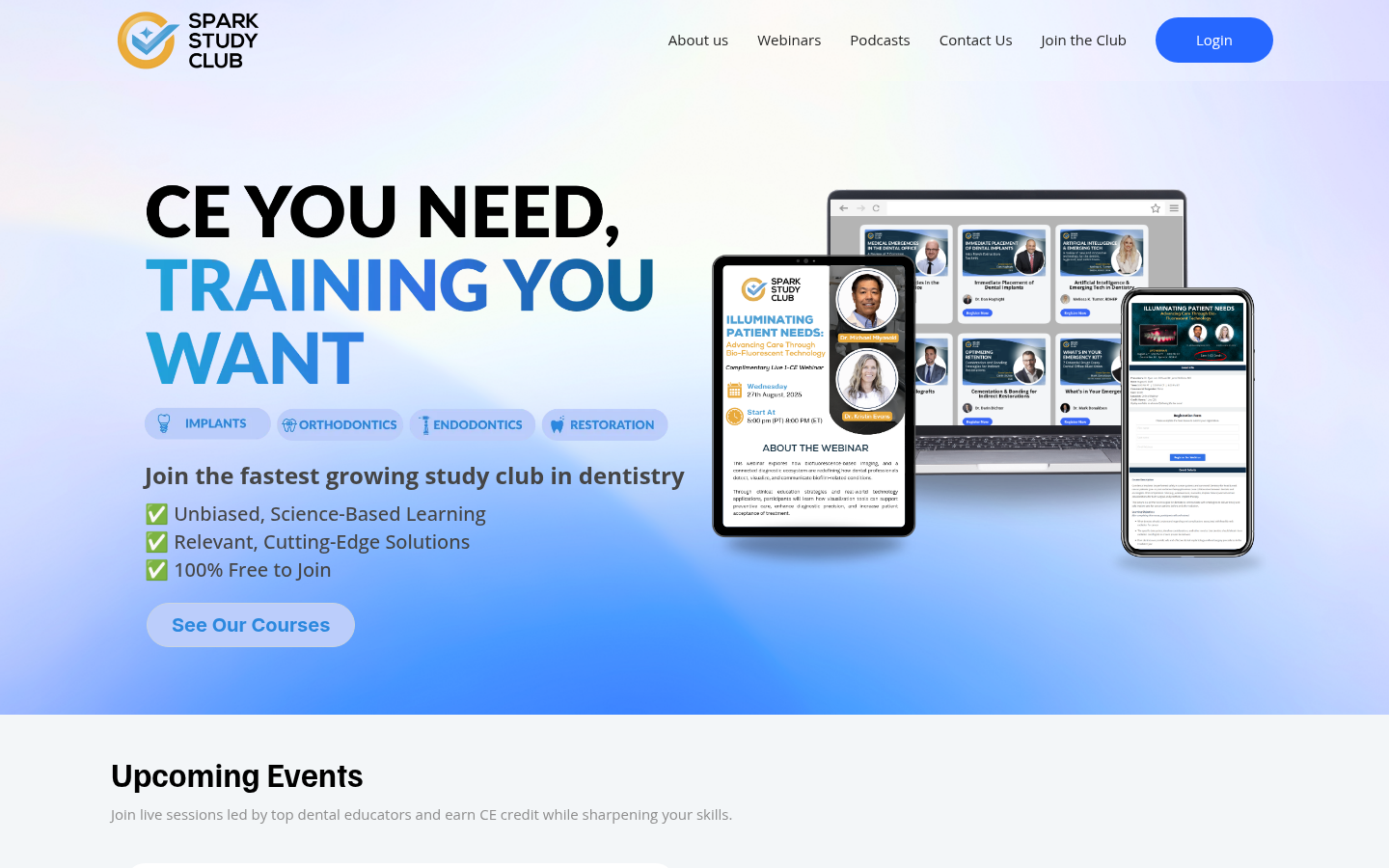
Spark Study Club, led by Donavan Dichter, partnered with Lead Gen Jay to build an outbound pipeline for its dental continuing education business. Spark Study Club runs live CE webinars for dental professionals, accredited by the Academy of General Dentistry (AGD PACE) and the American Dental Association (ADA CERP). Every session is free to attend, and seven years of CE records are maintained on each attendee's behalf.
The business model makes attendance the product. Attendees pay nothing. Revenue comes entirely from dental manufacturers who sponsor each session in exchange for attendee data and the right to choose the speaker and topic, so sponsorship pricing scales directly with how many dental professionals are in the room. Before the engagement, Spark Study Club averaged 200 registrations per webinar at a 50% show rate, against an industry expectation of 500.
The existing channels could not close that gap. An Eventbrite list of 180,000 contacts was capped at 10,000 sends per day, and the warm list running through GoHighLevel had poor deliverability, so invitations were not reliably reaching inboxes. Spark Study Club had the accreditation and the content. What it lacked was a way to reach new dentists at volume. Dentists are also a licensed, heavily marketed-to audience that receives constant vendor outreach, which made the challenge harder.
The campaign launched on 20 August 2026 and ran for seven weeks of sending through 8 October 2026. It used 50 mailboxes across 17 sending domains.
Key Metrics
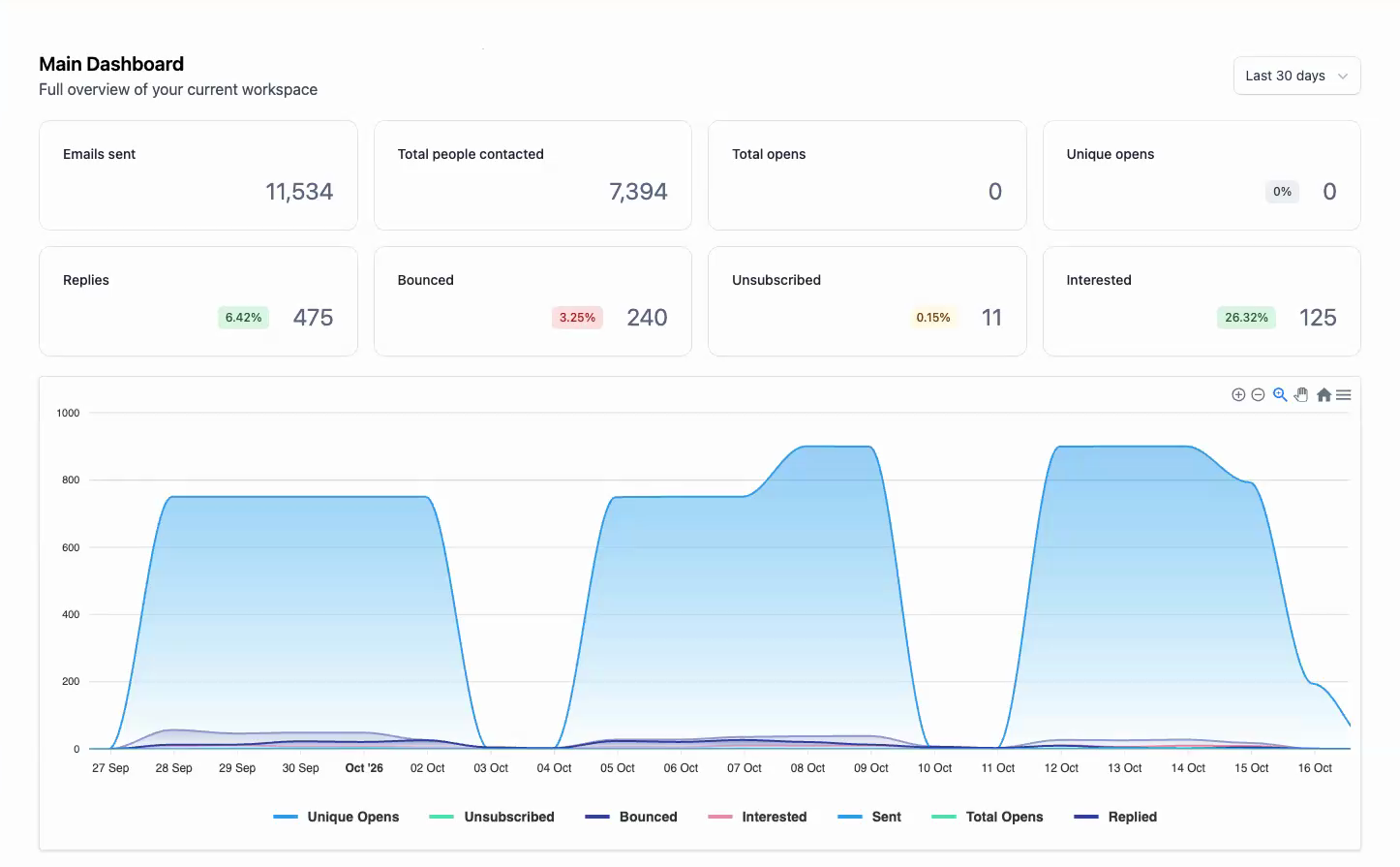
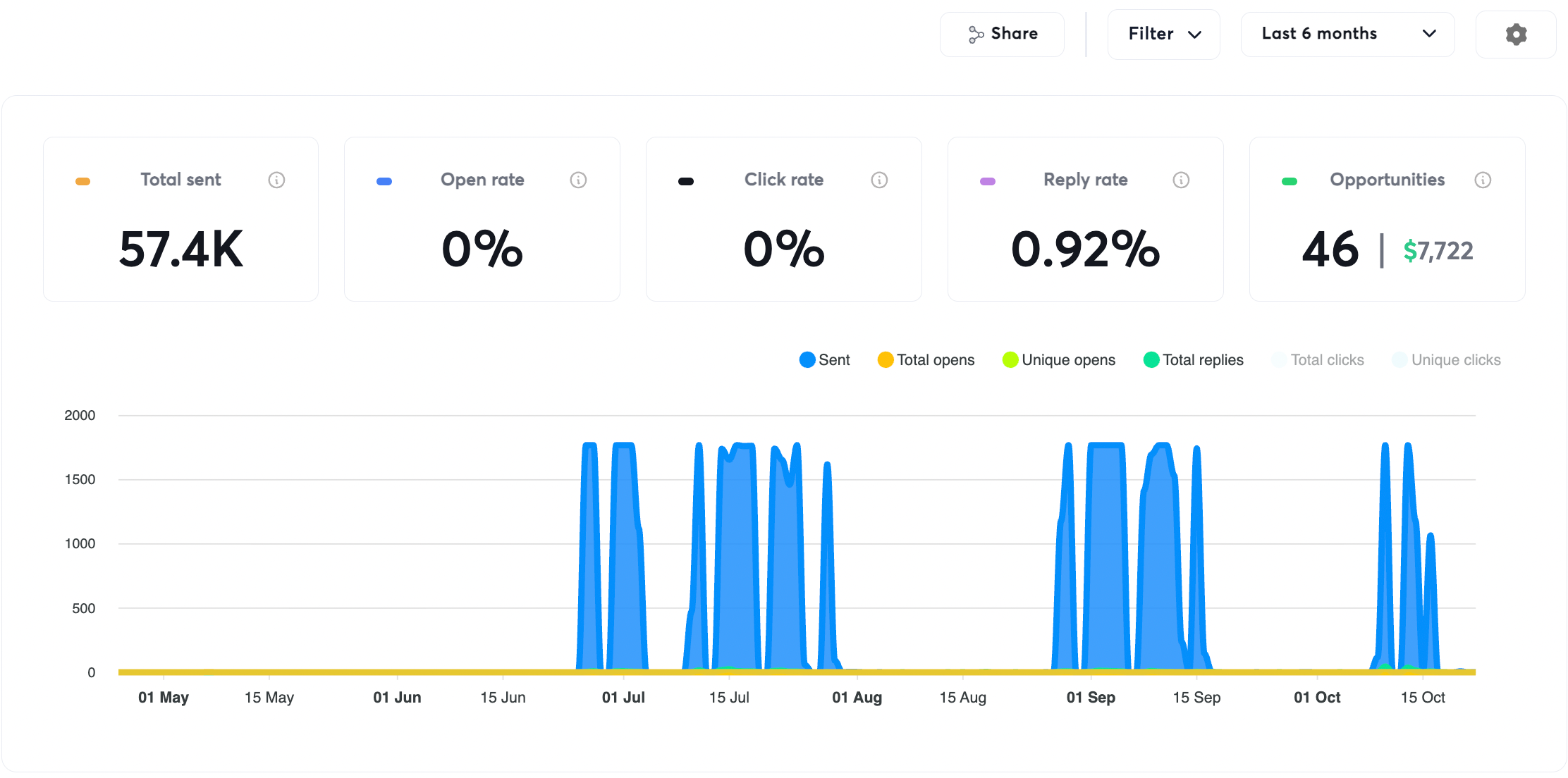
- Total Emails Sent: 39,834
- Leads Contacted: 15,114
- Replies: 274
- Reply Rate: 1.81%
- Opportunities Generated: 54
- Opportunities as a Share of Replies: 19.71%
- Bounce Rate: 2.49%
- Infrastructure: 50 mailboxes across 17 sending domains
- Campaign Window: 20 August 2026 to 8 October 2026 (seven weeks)
The 54 opportunities are notable given the audience. Licensed dentists field constant outreach from manufacturers, labs and software vendors, and they ignore most of it. Roughly one in five replies was a genuinely interested dentist rather than an auto-responder.
Best-Performing Campaign
Four Angles at the Start
The opening email launched across three audience segments and ran four competing angles: a compliance framing, a licence-requirement framing backed by an advisory board, a recognition framing built on an industry press feature, and a state-requirement framing.
After roughly 9,935 contacts, the four angles looked close, and no pair separated at conventional confidence. Reply rate, the metric most teams optimise on, pointed one way. Qualified interest pointed another.
Why Reply Rate Was Misleading
More than half of all replies on the account were automated out-of-office responses. Reply rate was therefore largely measuring how corporate a recipient's mail setup was, not how well the copy worked. Scored on interested replies instead, the ranking inverted.
The recognition angle placed second on raw replies but finished last on qualified interest, with one interested reply from 2,446 sends. It also carried the highest unsubscribe count of any arm.
The Pivot to Two Angles
Lead Gen Jay cut the two underperforming angles and rebuilt the campaign around the two that led on qualified interest: compliance and licence requirement. The follow-up sequence was left untouched, so the change isolated a single variable.
- Qualified Interest Before: 0.302% of contacts
- Qualified Interest After: 0.598% of contacts
- Lift: 1.98x (Fisher p = 0.033)
- Rebuilt Campaigns: 0.495% and 0.733% interested, against 0.302% for the original four-angle campaign
The strongest of the rebuilt campaigns ran at 0.733% qualified interest, more than double the rate of the original build.
Success Factors
Measuring Qualified Interest, Not Reply Rate
The biggest driver of success was scoring the test on qualified interest instead of reply rate. Had the test been called on replies, the worst-performing angle would have been kept and one of the winners cut. Auditing every reply by hand, rather than trusting the platform's headline reply count, surfaced the inversion and made the optimisation possible.
Compliance as the Entry Point
The opening email led with a concrete professional obligation: the CE hours every dentist must earn to renew a licence. It answered that obligation with accredited sessions at no cost. For a licensed audience facing a recurring deadline, a relevant obligation outperformed recognition and prestige framings by a wide margin. A reply such as "Please do so. I am interested in doing some online courses for my CE" shows the hook landing on pressure the audience already feels.
A Low-Friction, No-Cost Offer
Instead of opening with a pitch, the emails invited dentists into an accredited community with nothing to buy and nothing to schedule. This removed the biggest barrier to replying. Responses such as "Yes, I am interested and would like an invite", "Please tell me more" and "feel free to pass along the invitation to the group" show the soft entry point turning interest into conversations.
Willingness to Pivot
Success was not guaranteed on day one. Four angles ran, none separated cleanly, and the headline metric pointed at the wrong winner. Rather than letting an inconclusive test run on, Lead Gen Jay identified why the metric was misleading, cut the two underperforming angles (including one that was generating replies), and rebuilt around the winners.
Conclusion
Spark Study Club's campaign shows that a heavily solicited, licence-bound professional audience can be engaged when the message matches a real obligation and the offer carries no friction. Four angles were tested, the headline metric pointed at the wrong winner, and an audit of what prospects were actually saying inverted the ranking.
The 54 opportunities generated from 39,834 emails matter because of how Spark Study Club earns revenue. Sponsorship pricing scales with attendance, and the business was averaging 200 registrations per session against a target of 500. A sustained inflow of interested dentists at the post-optimisation rate directly affects the number Spark Study Club can put in front of a prospective sponsor, and with it the fee it can command.
The campaign also gave Spark Study Club something it did not have before: a way to reach dentists who have never heard of it, at volume, with a known conversion rate attached. Previously it could only re-market to a list it already owned, throttled at 10,000 sends a day through a channel with deliverability problems. It also now knows, on statistically significant evidence, which angle moves licensed dentists to act and which one cost it subscribers.
When the first read of the test pointed the wrong way, questioning the metric itself, rather than simply sending more, turned an inconclusive campaign into a standout result.
Past results do not guarantee future results. Individual outcomes vary based on industry, offer, and implementation.